Monday, April 13, 2020

Tishna: An Automated Pentest Framework For Web Servers, Web Applications To Web Security

About Tishna:
   Tishna is complete automated pentest framework for web servers, application layer to web security.

   Tishna was tested on: Kali Linux, Parrot Security OS, Black Arch, Termux, Android Led TV.


Tishna's interface: Tishna has 62 options with full automation and can be use for web security swiss knife.

Tishna's installation: First, boot your Kali Linux or Parrot Security OS up. Then open Terminal and enter these commands

Appeared:
  • Cyber Space (Computer Security).
  • Terror Security (Computer Security).
  • National Cyber Security Services.

Brief Introduction
  • Tishna is useful in Banks, Private Organisations and Ethical hacker personnel for legal auditing.
  • It serves as a defense method to find as much as information possible for gaining unauthorised access and intrusion.
  • With the emergence of more advanced technology, cybercriminals have also found more ways to get into the system of many organizations.
  • Tishna software can audit, servers and web behaviour.
  • Tishna can perform Scanning & Enumeration as much as possible of target.
  • It's first step to stop cyber criminals by securing your Servers and Web Application Security.
  • Tishna is false positive free, when there is something it will show no matter what, if it is not, it will give blank results rather error.

Developer

Support to the coder
   You can sponsor and support via BTC.
   The bitcoin address: 3BuUYgEgsRuEra4GwqNVLKnDCTjLEDfptu
qr code

Related word

How To Repair A Crashed SD Card And Protect Your Data

One of the many reasons users prefer Android devices is the ability to expand the amount of available storage space using the MicroSD Card. Since we have the ability add up to 256GB of external storage to Android devices today, you're bound to choke up when the SD card crashes without any tell-tale signs.
If you're experiencing issues on how to repair a crashed SD card on your Android device, there are certain fixes you can try out. Since there's not a singular solution to SD Card issues, we've created a guide to help you detect the issue with your external storage and mentioned multiple solutions to get your SD card working and even retrieve your stored data along with it.


Before you start

Don't format the card if you want to retain any of the photos on it. You can follow the tips in our separate article on how to format a write-protected SD card after you've tried to recover any files that are on your card.

Now, try and find a different card reader. If you've inserted an SD card into your laptop or PC's built-in slot and nothing happens, try using a different computer or a USB card reader.
Sometimes it's the reader at fault – not the card. You can buy a USB SD card reader online for just a couple of pounds which will accept both microSD and standard SD cards.

Steps to Repair a Crashed SD Card and Protect your Data:

Step 1 – Physically clean the SD Card

Despite being durable and built to last, SD cards are prone to crashing sometimes due to physical damage. Since you carry your phone around everywhere, some dirt and dust are bound to fill up in the cracks, that can make SD card stop working from time to time.
The first thing you can try to do on how to repair a crashed SD card is physically scrub and clean it.
  • Remove the MicroSD card from your Android device and place it on a clean surface. Make sure that you turn off your phone before pulling out the SD card for safety.
  • Flip the MicroSD card and using a white eraser, gently scrub the gold contact pins of the SD card to get rid of any residual dirt or grime.
  • If you have an alcohol-based cleaning solution or even nail polish remover around, dab it on to the connector pins using a Q-tip and gently rub it.
Once the SD card has dried out, you can plug it back into your Android device and turn it on to see if the solution has worked.


Step 2 – Format the SD Card

If your SD card is being detected by the Android device but you're having trouble accessing the saved files, there's a good chance that the files are corrupt. This could either be due to a particular broken file in the saved storage, or a virus that is causing the issue.
Either way, the only option there is left for you to try out is make the SD card reusable for formatting it.
  • From the home screen of your Android device, head over to the Settings app and then scroll down to find the Storage
  • In the Storage tab, you'll be able to find the Erase SD Card option, so go ahead and select it.
  • Confirm your action to delete all of the files and folders stored on your SD card and this should effectively solve the issue.

Step 3 – Check the SD card compatibility

If you are trying to figure out how to repair a crashed SD card on an older Android device, you might just need to look at the details more carefully. If your SD card fails to be recognized on the mobile device but works with your computer, the problem could be related to compatibility.
  • If the MicroSD card that you are trying to use with your older phone is SDXC version (built for higher transfer speeds), it will not be recognized.
  • Look up the maximum capacity of expandable storage that is supported by your device, since they can vary from starting at 64GB to all the way up to 256GB.

Step 4 – Diagnose the SD card using a PC

If a simple format did not help you solve the SD card problem, you might need a more technical analysis of the issue. To do so, you can plug in your SD card into a computer and use the diagnostic tools to find out the pertaining errors and effectively fix them.
  • Connect your Android mobile device to a computer using a USB cable.
  • Make sure that you connect Android as MSC (Mass storage mode) and not MTP (Media transfer mode). You can do this using the notification menu once you connect the phone to your computer.
  • Launch the Windows Explorer and right click on the SD card driver you see on the screen. In the options menu, choose Properties – Tools – Error Checking and wait for the entire process to complete.
  • The computer will try to update the software for your SD card and fix any errors that are causing it to crash.

Step 5 – Use chkdsk to fix/repair a corrupted SD card without data loss

The "chkdsk" command is your first choice for damaged SD card repair. Requiring no format, it allows you to fix or repair a corrupted SD card and regain access to all your important files on the device. Let's see how it works. (I'm using Windows 7 for this demonstration)
1. Plug in your SD card to your computer with a card reader.
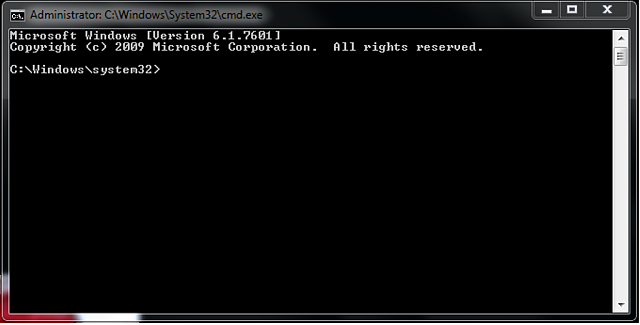
2. Go to the start menu, type in "cmd" in a search bar, hit enter and then you can see something named "cmd. exe" in a list of programs.
3. Right-click "cmd. exe" and then you will get the following command windows that allow you to fix your corrupted SD card without formatting.
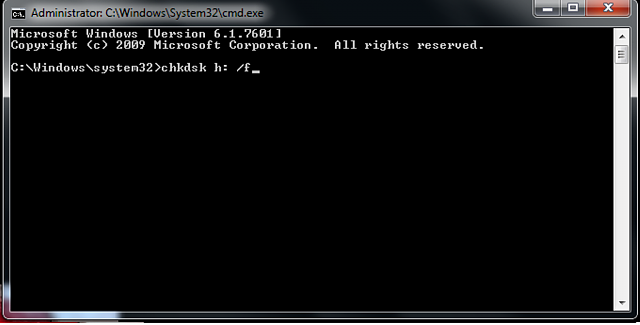
4. Type in "chkdsk /X /f sd card letter:" or "chkdsk sd card letter: /f ", for example,"chkdsk /X /f G:" or "chkdsk h: /f".
After finishing all the steps, Windows will have checked and fixed the file system of the SD card. It usually takes several minutes. After that, if you see "Windows has made corrections to the file system" in the command window, then congratulations! The damaged SD card is successfully fixed and you can see your data again. If not, you should try a third-party data recovery software to retrieve your files from the damaged SD card and repair it by formatting.
Once the process has been completed, you can go ahead and pop the SD card back into your Android device and see if the issue has been resolved.

Step 6 : Use EaseUS Data Recovery Wizard to recover data from damaged SD card

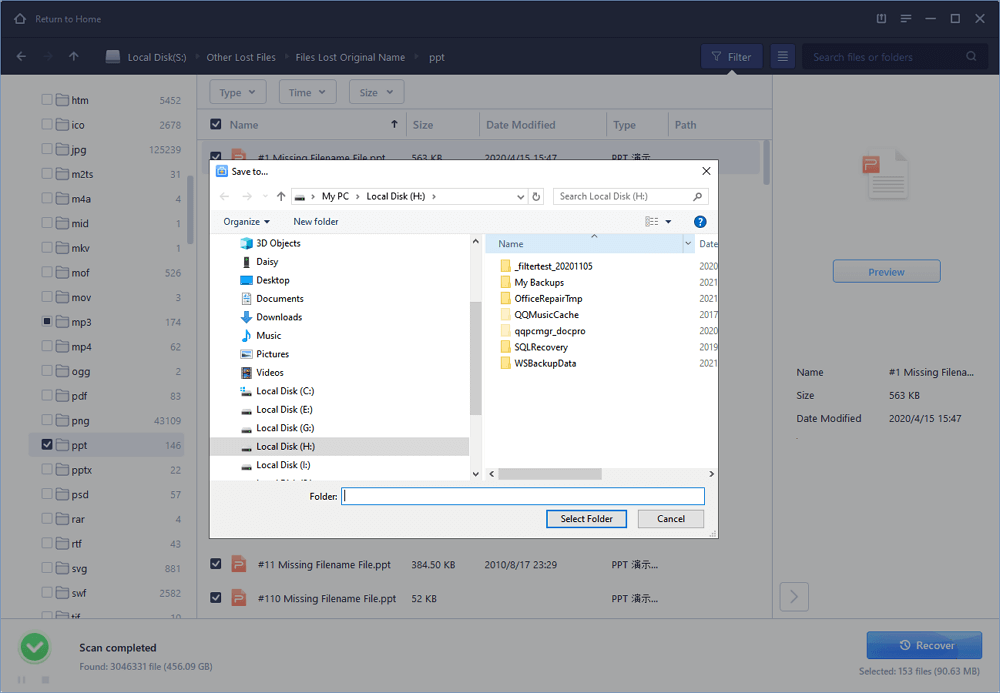
1. Connect the corrupted SD card to your PC, launch EaseUS's data recovery software, select the card and click "Scan".
2. A quick scan will first start to search all the lost and existing data on the SD card. And after that, a deep scan will automatically launch in order to find more files.
3. After the scan, choose those files you want to recover and click the "Recover" button to retrieve them back.

Final Words :

So finally through this article, you have got to know about the method by which the SD card could be repaired and hence the data in it could be saved for the further access. We have tried to present the method in easy to grab manner and we believe that you could possibly get to know about it easily. Hope that you would have liked the information in this post, if it is so then please share it with others. Also, do not forget to share the post with others, let most of the people know about the method. Share your comments about the post through using the comment box below. At last never the fewer thanks for reading this post!

Related posts


OWASP-ZSC: A Shellcode/Obfuscate Customized Code Generating Tool


About OWASP-ZSC
   OWASP ZSC is open source software written in python which lets you generate customized shellcodes and convert scripts to an obfuscated script. This software can be run on Windows/Linux/OSX with Python 2 or 3.

   What is shellcode?: Shellcode is a small codes in Assembly language which could be used as the payload in software exploitation. Other usages are in malwares, bypassing antiviruses, obfuscated codes...

   You can read more about OWASP-ZSC in these link:
Why use OWASP-ZSC?
   Another good reason for obfuscating files or generating shellcode with OWASP-ZSC is that it can be used during your pen-testing. Malicious hackers use these techniques to bypass anti-virus and load malicious files in systems they have hacked using customized shellcode generators. Anti-virus work with signatures in order to identify harmful files. When using very well known encoders such as msfvenom, files generated by this program might be already flagged by Anti-virus programs.

   Our purpose is not to provide a way to bypass anti-virus with malicious intentions, instead, we want to provide pen-testers a way to challenge the security provided by Anti-virus programs and Intrusion Detection systems during a pen test.In this way, they can verify the security just as a black-hat will do.

   According to other shellcode generators same as Metasploit tools and etc, OWASP-ZSC  using new encodes and methods which antiviruses won't detect. OWASP-ZSC encoders are able to generate shell codes with random encodes and that allows you to generate thousands of new dynamic shellcodes with the same job in just a second, that means, you will not get the same code if you use random encodes with same commands, And that make OWASP-ZSC one of the best! During the Google Summer of Code we are working on to generate Windows Shellcode and new obfuscation methods. We are working on the next version that will allow you to generate OSX.

OWASP-ZSC Installation:
   You must install Metasploit and Python 2 or 3 first:
  • For Debian-based distro users: sudo apt install python2 python3 metasploit-framework
  • For Arch Linux based distro users: sudo pacman -S python2 python3 metasploit
  • For Windows users: Download Python and Metasploit here.
   And then, enter these command (If you're Windows user, don't enter sudo):
DISCLAIMER: THIS SOFTWARE WAS CREATED TO CHALLENGE ANTIVIRUS TECHNOLOGY, RESEARCH NEW ENCRYPTION METHODS, AND PROTECT SENSITIVE OPEN SOURCE FILES WHICH INCLUDE IMPORTANT DATA. CONTRIBUTORS AND OWASP FOUNDATION WILL NOT BE RESPONSIBLE FOR ANY ILLEGAL USAGE.

An example of OWASP-ZSC

Related articles


  1. Pentest Tools Port Scanner
  2. Pentest Tools Url Fuzzer
  3. Hacker Tools Free
  4. Hacker Tools Mac
  5. Kik Hack Tools
  6. Hack Tools For Windows
  7. Hacker Tool Kit
  8. Hacker Tools
  9. Termux Hacking Tools 2019
  10. Hacker Hardware Tools
  11. Hacker Techniques Tools And Incident Handling
  12. Hacker Tools Mac
  13. Pentest Tools Website Vulnerability
  14. Hack Tools Github
  15. Best Hacking Tools 2019
  16. Easy Hack Tools
  17. Hacker Tools For Pc
  18. Beginner Hacker Tools
  19. Pentest Tools
  20. Tools 4 Hack
  21. Hacking Tools Kit
  22. Hacking Tools Hardware
  23. Pentest Tools Apk
  24. Computer Hacker
  25. Hacking Tools For Kali Linux
  26. Hacker Tools Free
  27. New Hack Tools

Spaghetti: A Website Applications Security Scanner


About Spaghetti
   Author: m4ll0k   Spaghetti is an Open Source web application scanner, it is designed to find various default and insecure files, configurations, and misconfigurations. Spaghetti is built on Python 2.7 and can run on any platform which has a Python environment.

Spaghetti Installation:

Spaghetti's Features:
   Fingerprints:
  • Server:
  • Web Frameworks (CakePHP,CherryPy,...)
  • Web Application Firewall (Waf)
  • Content Management System (CMS)
  • Operating System (Linux,Unix,..)
  • Language (PHP,Ruby,...)
  • Cookie Security
   Discovery:
  • Bruteforce:Admin Interface
    Common Backdoors
    Common Backup Directory
    Common Backup File
    Common Directory
    Common FileLog File
  • Disclosure: Emails, Private IP, Credit Cards
   Attacks:
  • HTML Injection
  • SQL Injection
  • LDAP Injection
  • XPath Injection
  • Cross Site Scripting (XSS)
  • Remote File Inclusion (RFI)
  • PHP Code Injection
   Other:
  • HTTP Allow Methods
  • HTML Object
  • Multiple Index
  • Robots Paths
  • Web Dav
  • Cross Site Tracing (XST)
  • PHPINFO
  • .Listing
   Vulns:
  • ShellShock
  • Anonymous Cipher (CVE-2007-1858)
  • Crime (SPDY) (CVE-2012-4929)
  • Struts-Shock
Spaghetti Example:
python spaghetti --url example.com --scan 0 --random-agent --verbose


More articles

Saturday, April 11, 2020

Good People Doing Cool Things…


Just read an email from one of the original DFG Kickstarter backers, James.

James helped me out quite a bit in my KS giving feedback, making videos and just chatting about the Kickstarter, the industry and life in general. James is good people and I am more than happy to help any way I can.

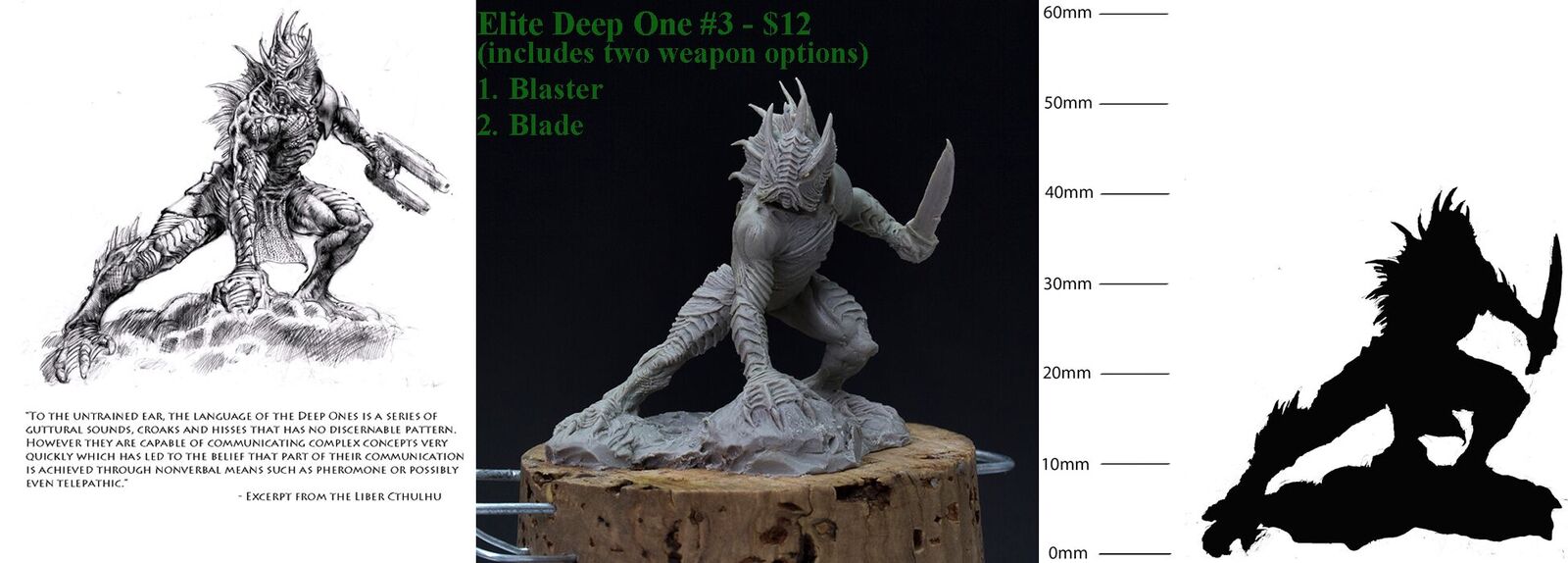
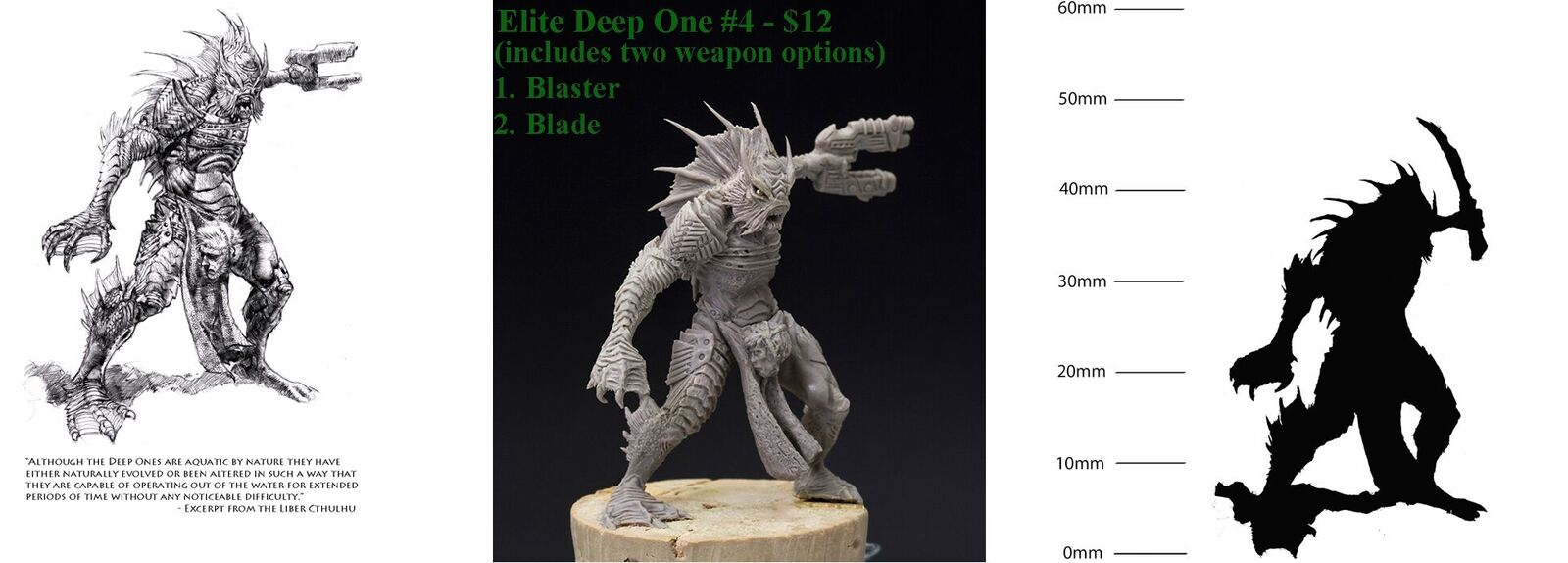
James started up his own company and miniatures line. Reclusive Phoenix, is running a kickstarter (Slumbering Oblivion: Cthulhuinspired game miniatures) 


The minis look great! If you like Cthulhu or creature minis to use in other games, please go give it a look, if you are short on funds now or it's not your cup of tea, you can still help by spreading the news.

I don't know about you, but I am really loving that Murguba :P

Wednesday, April 8, 2020

Storium Theory: Only Natural

I've spent quite a lot of time on this blog on Strength cards, Weakness cards, and Subplot cards. I haven't spent all that much time, though...if any...on the other card type that players pick out at character creation: Nature.

So, let's talk Natures. Specifically, I want to focus on writing your own Nature card during character creation. What is a Nature card all about? What should you do if you're creating your own for your own character?

A Nature card is your "at a glance" statement of just what, exactly, the character is. It's the broad strokes of the character, the central concept that defines them. In many ways, it is the single most important card you hold. You never, ever play it in the game, but it should guide every single thing that you do.

If you're familiar with tabletop roleplaying, a Nature card is similar to your class in some regards. It defines what people should expect from your character overall. Now, Storium Natures are nowhere near as defined and spelled out as classes in some tabletop RPGs, but the purpose, in terms of expectations, is similar: They tell the narrator and other players what sorts of things they should probably expect your character to be doing over the course of the game.

It's pretty understandable in that regard, right? If you're a Warrior, people expect you to fight. If you're a Thief, people expect you to sneak around and steal. Combined with your starting Strength, Weakness, and Subplot, a person can get a quick at-a-glance look at what makes your character tick.

But that's not all a Nature card can be. The default natures are often by necessity pretty broad, right? You get things like Warrior, or Paladin, or Wizard. They're broad, easily applied to a variety of characters. They suggest a little about what the character is, but really defining the specifics are left to the description and the other cards.

And that's fine, for the Nature cards built into a world or game to begin with. But again, that's not all a Nature can be.

When you're writing a custom Nature card during character creation, go deeper. More specific. Make your character's Nature.

When you're creating your own Nature card while you're creating a character, you aren't making something anyone else is going to have to use. You're not making something that has to be applicable to lots of different characters. You're making something that applies to your character, and your character alone.

Your custom Nature card, then, can be more openly about your specific character. It can say things that only apply to your character. It can spell out more details about their specific variant on an overall concept, or tell how they're entirely unique among the characters.

And in doing so, it can give a much, much stronger "at-a-glance" understanding of the character.

Here's some examples:
  • You might explain more of a character's story or highlight the most important element of it: 
    • A character isn't just the Chosen of a Time God, he's the Displaced Chosen of a Time God, highlighting the fact that his personal tale is all about being displaced in time.
    • A character isn't just a Sorcerer, he's a Cursed Sorcerer, and the card text even notes that he was cursed for arrogantly challenging a person he shouldn't have.
  • You might establish that you're something different or unique, and explain the concept in more detail:
    • You're an Experimental Computer, and because that concept is not exactly a normal one for the world, you take the time to spell out a basic form of your origin and what sort of things you might be expected to do.
    • You're a Commune Kid, and you take some time to spell out that that means you've been raised with great freedom, but a general lack of restraint. 
  • You might highlight something about your abilities that makes you a more focused or unusual variant on something expected:
    • You're not a Wizard, you're a Wizard of the Flame, focused entirely on fire and heat magics.
    • You're not a Warrior, you're a Bladedancer, an agile and graceful fighter for whom battle and blades are sacred and beautiful.
If you're writing a custom Nature, take a little time with it to make it something different. There's a reason you haven't picked one of the existing nature cards - so take the time here to make your custom Nature something particularly interesting, or to tie it directly to what makes your character unique or separate from others that are of a similar type. Or, heck, make up something entirely new (appropriate to the game, of course)!

For names...use more than one word, or at least an unusual and evocative single word. Give your nature a name that immediately calls to mind some traits or a mental picture of what this sort of character could be. Your Nature card's name should immediately give a feel for what your character is about.

For the text on the card, take a little time to spell things out in a bit more detail than the regular nature cards do. The regular nature cards are intended to be fairly generic in most cases, so they don't need to go into heavy amounts of detail. People understand what a Wizard is, or what a Warrior is, or what a Thief is. In the more unusual genres, there may be some more detail and thematic content, but overall, an included Nature card is pretty basic.

Don't be basic.

You don't need to spell out every detail of your character here, obviously. You don't need to go into much detail. But explain what the Nature is. What makes it interesting? What ties it in to the story and world? What sort of things is it expected to do? What sort of things might be expected to give it trouble?

Again, don't list everything...but give a general understanding. When you define a custom Nature well, you give a narrator a great, quick picture of how you're going to interact with the story...and you also make it much, much easier to use the Nature yourself for later inspiration! Believe me, six months in to a Storium game, it can be a little tough to remember just what you were getting at when you made the character half a year before...it helps to have taken the time to spell it out a bit.

Custom Natures are more art than science, but they are loads of fun if you take a little time on them. They're some of my favorite things to create when making my character in a game. Sometimes I'll start with one, sometimes I'll come back to it once the character is done, but it's fun just thinking of a way to "sum up" what a character is about, and it continues to help me as I go through the game and think about what, exactly, my character should be doing or how they should be doing it. So take some time, have some fun with it, and get creative - you'll find you have a fuller-feeling character, one that feels vibrant and interesting, and one that you can play more easily as you go through the game.